

Living in Puerto Viejo, Costa Rica: A Buyer's Guide to Daily Life
By Meg Williams, Realtor, Puerto Viejo resident since 2015
Last updated: August 10, 2026
Quick answer: Puerto Viejo de Talamanca is a real, year-round Costa Rican community, not a resort town — it has its own economy, culture, and residents who live here full-time. Most expats settle in Puerto Viejo town, Playa Negra, Playa Cocles, Playa Chiquita, Punta Uva, or Manzanillo, each with a different feel and price point. Cost of living generally runs higher than buyers expect for cars, rent, and restaurants, while local labor, home services, and wellness treatments are a genuine bargain compared to North America.
Puerto Viejo de Talamanca is a real, lived-in community on Costa Rica’s Southern Caribbean coast. It’s not a resort town purely built for tourists. It has its own economy, its own culture, and a community of people that actually live here full-time.
This guide answers the questions we most often hear from buyers considering a move here.
What Does the Area Feel Like?
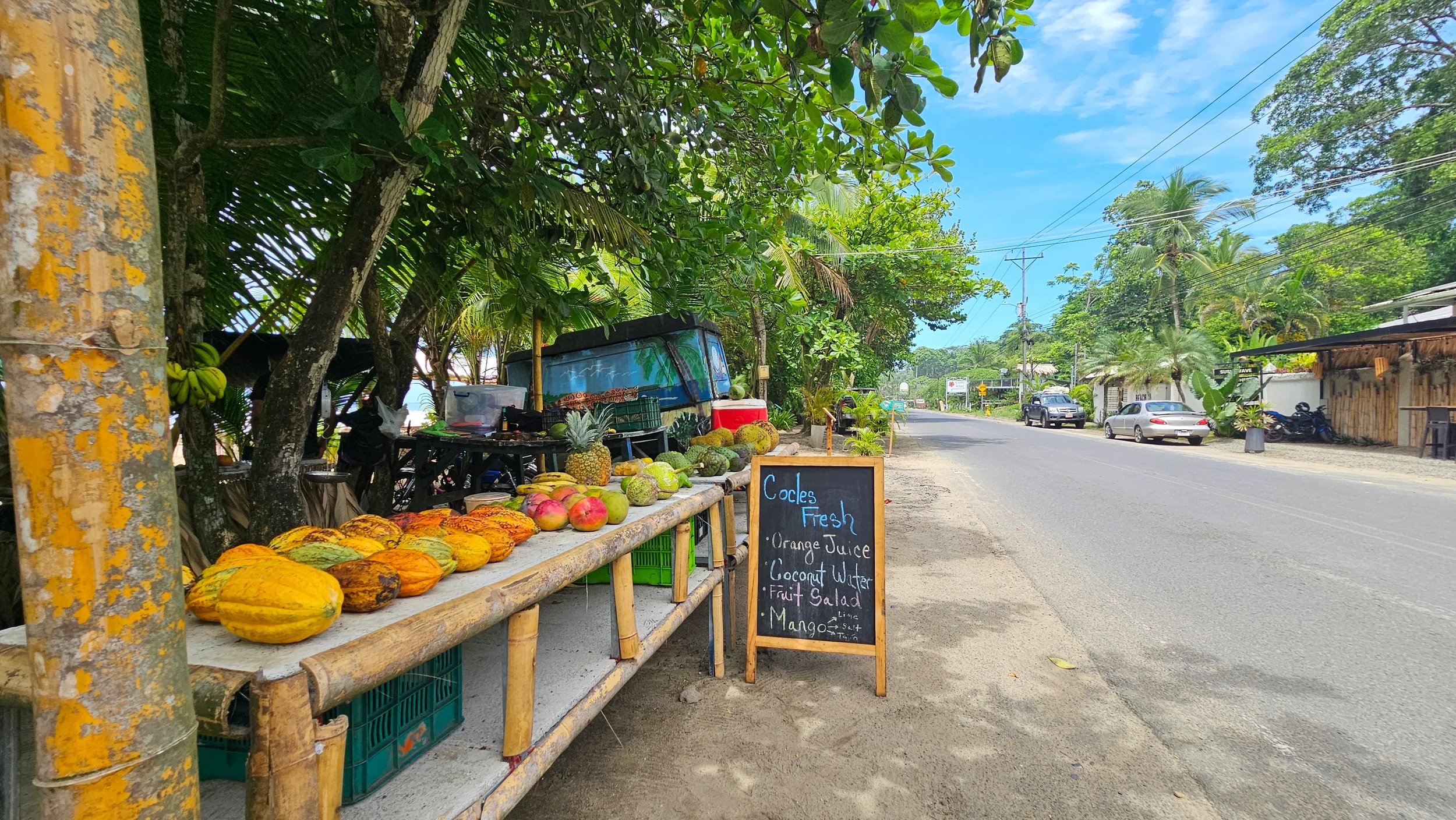
Puerto Viejo is a true beach town. It is defined by its vibrant Afro-Caribbean culture, lush jungle meeting the ocean, and quite the laid-back rhythm. There is a real sense of community, freedom, and friendliness that you recognize as soon as you arrive. Neighbors know each other; people are riding around on bikes, scooters, ATVs, and tuk-tuks. Restaurants are open-air, grills line the road, and the smell of Caribbean food wafts through. No high-rises or resorts. No rigid schedules; no one is dressed fancy; laid back is the best way to describe what this area feels like.
Who Lives in Puerto Viejo?
Puerto Viejo isn't a single-culture community. It's a mix of indigenous Bribri communities, Afro-Caribbean families with roots going back generations, longtime tico (Costa Rican) residents, and an international group of expats and digital nomads. You'll see backpackers, families with kids in school, wellness practitioners, and retirees all sharing the same beaches and restaurants. For families weighing the move, our Schools in Puerto Viejo & Cahuita guide breaks down the local education options.
This mix of people shapes daily life here. It's a working town with its own economy, not a development built just for outside visitors. Most expats settle in one of these areas:
Puerto Viejo Town: Primarily commercial, with most properties owned by hotel, hostel, and Airbnb operators who live on-site. Limited real estate inventory for sale, and what's available tends to be expensive.
Playa Negra: The area with the most post-COVID growth, bringing a wave of new construction and a strong expat presence. Newer builds dominate the landscape here more than anywhere else in the corridor.
Playa Cocles: A more established neighborhood where longtime Caribbean families and expats have settled alongside each other, giving it a mixed, rooted community feel.
Playa Chiquita: Highly sought-after but with limited titled property available, which keeps prices high. A blend of expat residents and local families, with a quieter, more residential character.
Punta Uva: Low-density by design; land use regulations limit how much development can happen here, so it's more jungle than neighborhood. Fewer residents, more nature.
Manzanillo: Similar to Punta Uva in density and character, with strict land regulations keeping development minimal and the environment largely intact. Each has a different feel and price point; this is part of the conversation we have with every buyer before they start to commit to a singular location.
Is It Safe?
Puerto Viejo functions like a small town; most residents know their neighbors and look out for one another. Standard precautions apply, as in any town: don't leave valuables unattended, use common sense after dark, secure your property.
Costa Rica is a developing country, and police presence and response times aren't as funded or as fast as buyers from the U.S., Canada, or Europe are accustomed to. In a small town like Puerto Viejo, the community fills some of that gap. For example, neighbors notice when something's off, and word travels fast. The most common issue is petty theft. Never leave bags unattended in any public space.
What's Daily Life Like?
Daily life here is centered around the pura vida lifestyle and enjoying the paradise all around you.
Mornings start early: The sun rises around 5 AM year-round, and most locals are up with it. Bread & Chocolate and Cafe Rico are common early stops for coffee.
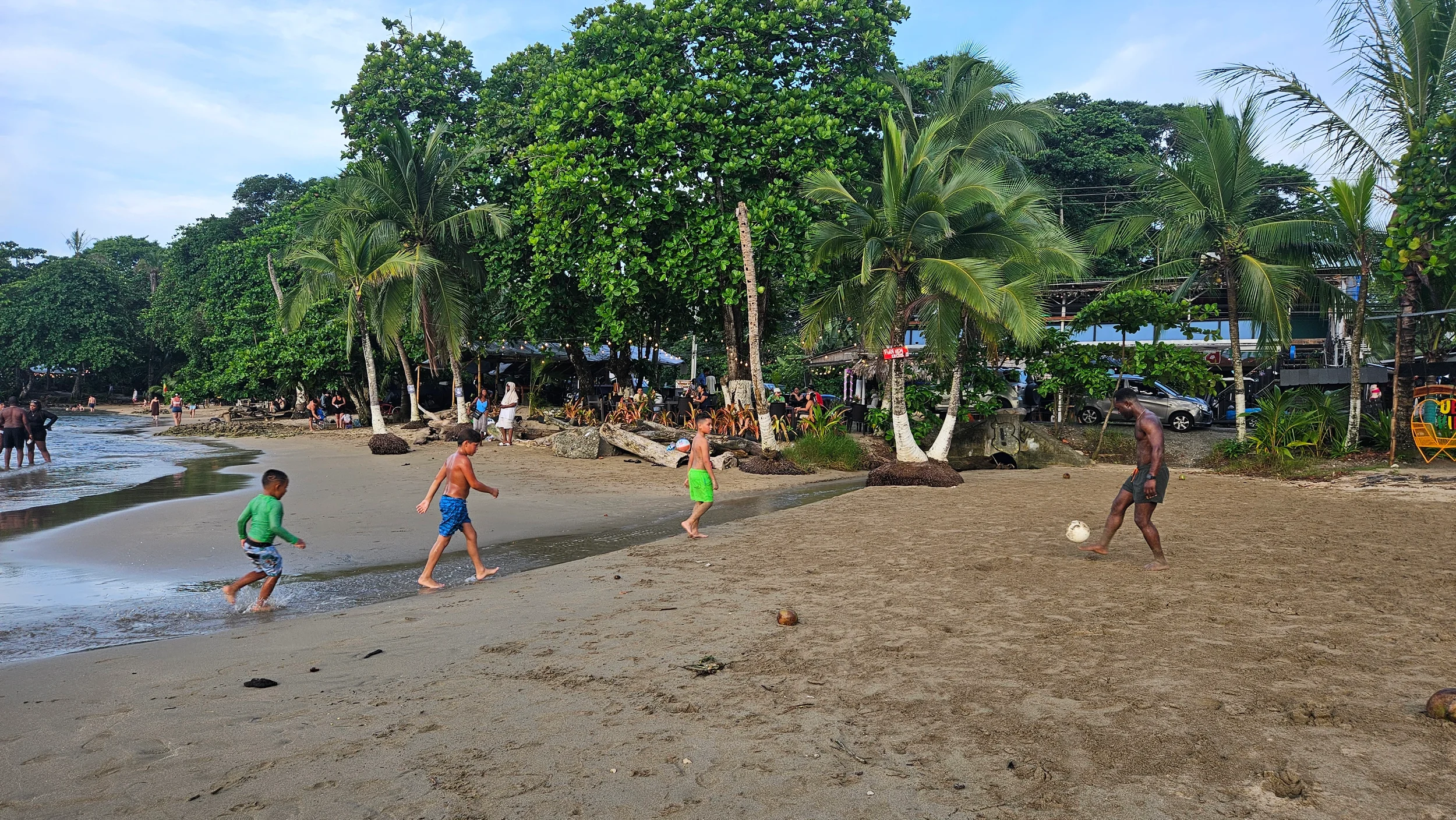
Midday tends to center around the beach: Beach Break, a section of Playa Cocles, or Chino Beach in Puerto Viejo, functions as an informal gathering point, with food vendors, families, and familiar faces.
The week has a rhythm to it. Saturday is the anchor. The market in Puerto Viejo draws the community out. Whereas weekdays are quieter and more routine. Errands often mean visiting a handful of smaller vendors and stores rather than a single grocery run covering everything. It's also common to find fruit vendors selling fresh produce right at the end of your road.
Many residents and expats work from home or from a café. Power and water are generally reliable, though occasional outages are part of life in a more rural, jungle-adjacent setting. This is worth knowing going in, but not a cause for concern.
The season also shapes the day-to-day feel. High season (roughly December-April) brings more visitors and energy into town; the quieter months feel noticeably more local, with a slower pace and fewer crowds at the beach and in restaurants.
Transportation looks different than most buyers expect, too. The main coastal road carries bicycles, scooters, tuk-tuks, ATVs, and cars more than standard traffic, and many residents get around primarily by bike. Evenings are for spending time with family and enjoying meals. Puerto Viejo does have an active nightlife scene in town for buyers who want to participate in that.
What's the Vibe and Community Like?
The community here forms around a handful of occasions: the Saturday market, Beach Break, the yoga studios, and informal local WhatsApp or Facebook groups all function as places where the same faces show up week after week.
Word of mouth carries weight here. Recommendations, openings, and local knowledge tend to move through conversation and community networks before they show up online. This is a big reason why working with people who are genuinely plugged into the area matters once you're here, not just before you buy.
For newcomers, there's typically a settling-in period before the community starts to feel familiar, but locals and expats generally mix easily rather than staying in separate circles. Cooperation shows up in practical ways too; neighbors checking in on each other, local businesses supporting one another, and people willing to help newcomers figure things out.
What's the Internet and Infrastructure Like?
.This can be a deciding factor in whether Puerto Viejo works for full-time buyers versus seasonal residents, and the answer has changed significantly in recent years.
High-speed fiber-optic internet now runs through the main corridors of Puerto Viejo, Cocles, and Playa Chiquita, providing reliable service for remote work, video calls, and everyday connectivity. Starlink has also made a significant impact on reliability and accessibility. While fiber-optic service can occasionally go down and remain offline for a period of time, Starlink provides a dependable alternative for remote workers.
Coverage is not uniform throughout the entire region, particularly in areas farther from the main road or deeper into Punta Uva and Manzanillo, so internet availability and reliability should always be verified for a specific property before purchasing.
The highway into Puerto Viejo has recently been completed with four lanes, making the drive from San José noticeably easier. Only the main coastal road is paved; everywhere else is gravel. A 4x4 isn't necessary for most properties, but is worth considering if you're looking at higher-elevation or mountain parcels.
Grid power covers the developed corridor, and outages are occasional rather than frequent, usually tied to weather. Some more remote properties use solar or a backup generator, which is worth asking about if you're planning to work from home. Water in town runs through municipal systems, while many properties rely on wells. At the time of writing, all properties in the area use individual septic systems.
Medical care in the area is available through several 24-hour clinics, including one in Puerto Viejo and others in Hone Creek, Aruma, and San Gabriel. For planned surgeries or more serious medical issues, most expats typically travel to San José for treatment. There is also a public hospital in Limón; however, for more serious medical needs, many people prefer the higher level of care and better-maintained facilities available in San José.
Where Do I Shop?
Day-to-day shopping is more localized than buyers expect, but it's well covered.
Several well-stocked grocery stores serve the area, including Super Negro, which carries the widest selection of imported, vegan, and gluten-free options. The Saturday market in Puerto Viejo runs from 6 AM to 12 PM and is the main source for fresh produce, with smaller markets running other days in Playa Chiquita and Cahuita. A grass-fed meat truck comes through neighborhoods on a regular schedule, as do vendors like The Nest for eggs. Las Lapas delivers fresh dairy like yogurt, cream, and ice cream directly to local stores. Beyond that, there are local artisanal producers offering niche products like kombucha and other specialty foods, so sourcing good food outside the grocery store is very doable.
For hardware and home maintenance, local ferreterías (hardware stores) carry what you need for most home projects.
Appliances are best sourced in Bri Bri, the nearest town with dedicated appliance stores. Mattress stores are available there as well. For furniture, Bodegón in Cahuita is a thrift store that brings in used goods from Europe with a mix of secondhand and some new items, and the main place most residents furnish their homes. Local craftspeople also produce handmade furniture and cabinetry, and are worth seeking out for custom or higher-quality pieces.
What's the Wellness Lifestyle Like?
Wellness here goes far deeper than what you'd expect from a beach town. Beyond the tourist-facing options, there's a wide variety of alternative healing modalities available through studios and independent practitioners, more than most buyers anticipate finding in a town this size. Beachside massage, jungle spa treatments, and other healing practices are part of everyday life here, not special occasions. Buying a coconut at a beachside stand or stopping by the organic market are equally part of that rhythm.
Pricing is extremely economical compared to the US, which matters for buyers who want to make wellness a genuine part of daily life rather than an occasional luxury. For people looking to reset their nervous system and step off the treadmill, that combination of access and affordability is a real draw.
How Can I Buy There, and What's the Investment Potential?
The South Caribbean market is diverse, from modest jungle lots to high-end villas, but it operates differently than buyers from North America typically expect.
There is no public MLS in Costa Rica. Pricing data is inconsistently documented outside proprietary systems, which is why local representation matters more here. My Puerto Viejo Realtor maintains a private, comprehensive database of all Southern Caribbean listings, and clients get informational access to the system, covering everything available in the area that wouldn't surface through a public search.
Development is tightly regulated, particularly around the maritime zone and the wildlife refuge. This limits supply and has supported long-term value, but zoning and land classification need careful verification before you commit.
Puerto Viejo has seen steady growth, and the area is increasingly on the map; more publications are covering it, and buyer interest from North America and Europe continues to build. That said, this isn't a market to approach purely as a financial investment play. Most buyers come with a dual purpose in mind: personal use part of the year, rental income the rest. Whether a property supports that depends on location and quality of property management.
Working with a local agency is one of the best ways to access what’s truly available in the Puerto Viejo market. My Puerto Viejo Realtor’s knowledge of the market, current listings, and the nuances of each neighborhood helps bridge the gap between what’s publicly visible online and what’s actually available for sale. For the full buying process, due diligence, escrow, and closing, read our guide: Costa Rica Caribbean Real Estate: A Buyer's Guide.
Frequently Asked Questions
-
On Costa Rica's South Caribbean coast, in Limón province, close to the Panama border.
-
Generally yes, with the same common-sense precautions you'd take in any town.
-
Most travelers fly into San José and connect by shuttle, bus, or rental car. Full guide: How to Get to Puerto Viejo.
-
Mainly Puerto Viejo town, Playa Negra, Playa Cocles, Playa Chiquita, Punta Uva, and Manzanillo.
-
Costa Rica is not as affordable as many buyers expect across the board. Cars and rent are not cheap, and food and restaurants are not necessarily a bargain either. Where costs come down is when you go directly to local vendors, markets, and artisanal producers. Services like housekeeping, yard work, and handyman work are very economical compared to North American rates, and the wellness lifestyle here is a fraction of what it would cost in the US. It's worth budgeting honestly before you make the move.
-
Read our full guide: Is Puerto Viejo for You?
Thinking About Relocating to Puerto Viejo?
Living here full-time is different from visiting, and it's worth understanding that before you commit to a property. We work with buyers relocating, investing in a second home, or building a business here, and we're direct about what each location actually offers day-to-day, not just the vacation version.
Ready to look at listings or talk through which area fits your situation? Reach out to our team.
