

Costa Rica Made Forbes' Top Global Retirement Destination List; the Caribbean Coast Didn't Make the Story
A.M. Costa Rica reported this week that Forbes named Costa Rica one of the top global retirement destinations for Americans in its 2026 report, which evaluated 24 countries across five continents. It's a well-earned honor, and more Americans are noticing every year. By the end of 2024, 712,000 Americans were already collecting Social Security benefits abroad, up 20 percent over the past 13 years.
If you read that article expecting to hear about the Caribbean coast, though, you won't find it. The coverage stays almost entirely in the Central Valley, San Jose, Heredia, Alajuela, Cartago, with specific mentions of Atenas and Santa Cruz in Guanacaste. That's not wrong. It's just incomplete. We live and work full-time on the South Caribbean coast, and we want to fill in the part of the story that got left out.
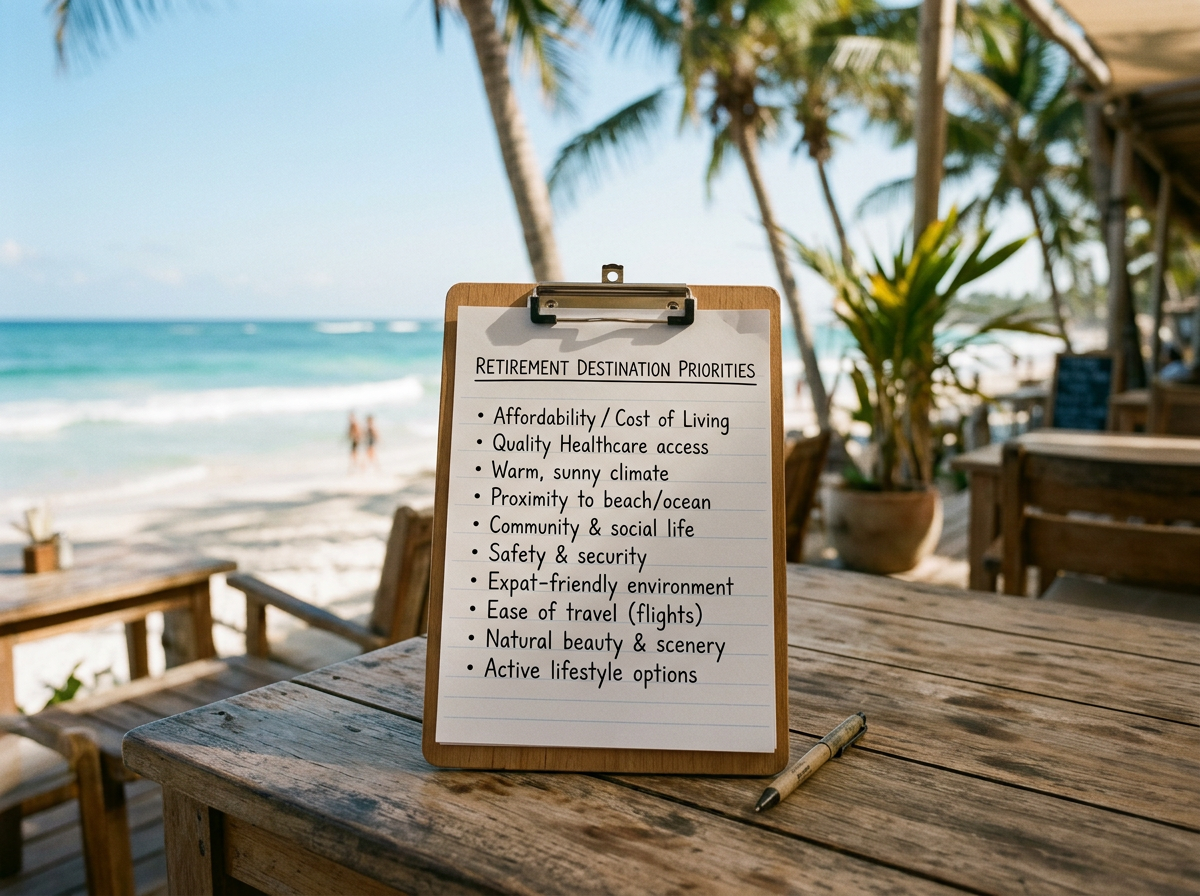
What the article got right, and why it applies here too
Nearly everything Forbes points to as a reason to retire in Costa Rica is a national policy or a national fact, not a Central Valley one:
The Pensionado visa requires proof of about $12,000 in yearly income and renews every two years. That rule doesn't change depending on which coast you choose.
Public healthcare through the Costa Rican Social Security Fund runs about $150 a month, nationwide.
Cost of living is significantly lower than the US average across the country, not just in San Jose.
The article even calls out "beaches on two oceans" as one of Costa Rica's draws. One of those oceans is ours.
Costa Rica holds 6 percent of the planet's terrestrial biodiversity, and the South Caribbean is one of the most concentrated pockets of it, between Cahuita National Park and the Gandoca-Manzanillo Wildlife Refuge.
None of that is exclusive to the Central Valley. It's just where the story happened to focus.
What retiring on the Caribbean coast actually looks like
The South Caribbean is a string of small communities rather than one town: Puerto Viejo, Cahuita, Punta Uva, Playa Negra, Playa Chiquita, Cocles, Manzanillo, and Hone Creek. Each has its own character, from Cahuita's quiet village feel to Puerto Viejo's more active town center, to Punta Uva's especially private and international small community.
On price, titled land starts under $100,000 for smaller lots set back from the beach, and established homes in well-positioned areas start around $300,000. There's no public price database for the region, since Costa Rica has no centralized government MLS at all, which is exactly why we built our own. We maintain a proprietary, Caribbean-wide MLS-style database that brings together listings from multiple agencies, private sellers, and off-market opportunities across all of these towns in one place.
The honest trade-offs
We'd rather tell you the reality than sell you the dream. The Caribbean coast is more rustic and less developed than the Central Valley or the tourist corridors of Guanacaste. It draws a different kind of retiree, someone who wants an authentic Afro-Caribbean, jungle-and-beach lifestyle over resort infrastructure and shopping centers on every corner.
Access matters too. Most flights land in San Jose, and getting to the Caribbean coast from there takes some driving. We cover exactly what that looks like in our blog on getting from San Jose to Puerto Viejo.
There are also a few legal details specific to this coast worth understanding before you buy, particularly around Costa Rica's Maritime Zone and land within the Kekoldi Indigenous Reserve. We go through these and more in detail in our Caribbean real estate guide, and we walk every client through them personally before any offer goes in.
Common Questions about Retiring in Puerto Viejo and the South Caribbean
-
Description text goes hereYes. The same national advantages Forbes cited for Costa Rica overall- the Pensionado visa, affordable public healthcare, and lower cost of living than the US, apply on the South Caribbean coast too. Towns like Puerto Viejo, Cahuita, and Punta Uva offer a slower, more rustic version of the retirement lifestyle than the Central Valley or Guanacaste.
-
Titled land on the South Caribbean coast starts under $100,000 for smaller lots further from the beach, and established homes in well-positioned areas start around $250,000. Public healthcare through Costa Rica's Social Security Fund runs about $150 a month.
-
The Pensionado visa requires proof of about $12,000 in yearly income and is renewable every two years. It applies nationwide, so it works the same way for retirees settling on the Caribbean coast as it does in San Jose or Guanacaste.
-
Costa Rica has no centralized government MLS. My Puerto Viejo Realtor maintains a proprietary, Caribbean-wide MLS-style database that pulls together listings from multiple agencies, private sellers, and off-market opportunities across Puerto Viejo, Cahuita, Punta Uva, Playa Negra, Playa Chiquita, Cocles, Manzanillo, and Hone Creek.
If you want the part of the story that wasn't written
We live full-time in Cocles, real estate is our full-time job, and we built the only Caribbean-focused property database in the region because nobody else was tracking it. If you're considering retirement in Costa Rica and want to see what the Central Valley coverage left out, tell us what you're looking for, and we'll put together a list of real, currently available properties on the Caribbean coast.
See our Caribbean real estate guide or Learn more about moving here

